
Four years ago, the full-scale war became a new reality for Ukraine. Since then, February has been the hardest month for Ukrainians. Psychologists call this the “anniversary effect,” when our bodies and memories bring us back to the moment of trauma. We recall the first explosions, the first phone calls, the first decisions. Despair, fear, uncertainty.
We also often remember February 23 – the last peaceful day before the Russian invasion. Each of us tried to grasp the scale of the looming threat. Some believed a major war was imminent, others did not. Some packed a “go bag,” while others were absorbed in daily routines.
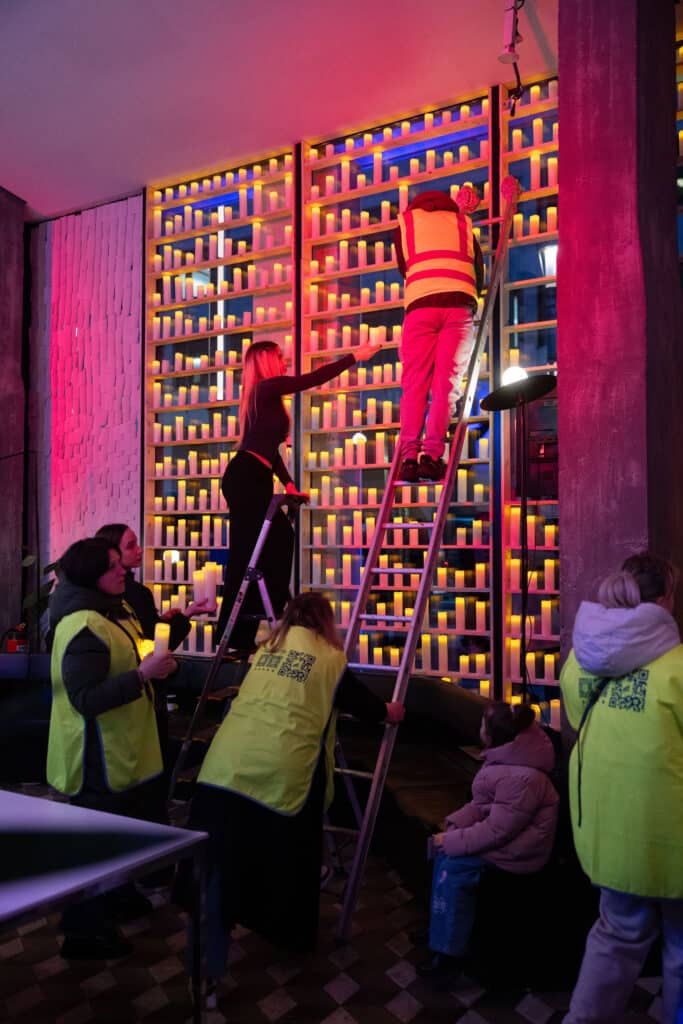
To honor this memory, to pay tribute to those lost in this war, and to ensure the world does not forget, Ukrainian Voices RC organized the event “Premonition of War.”
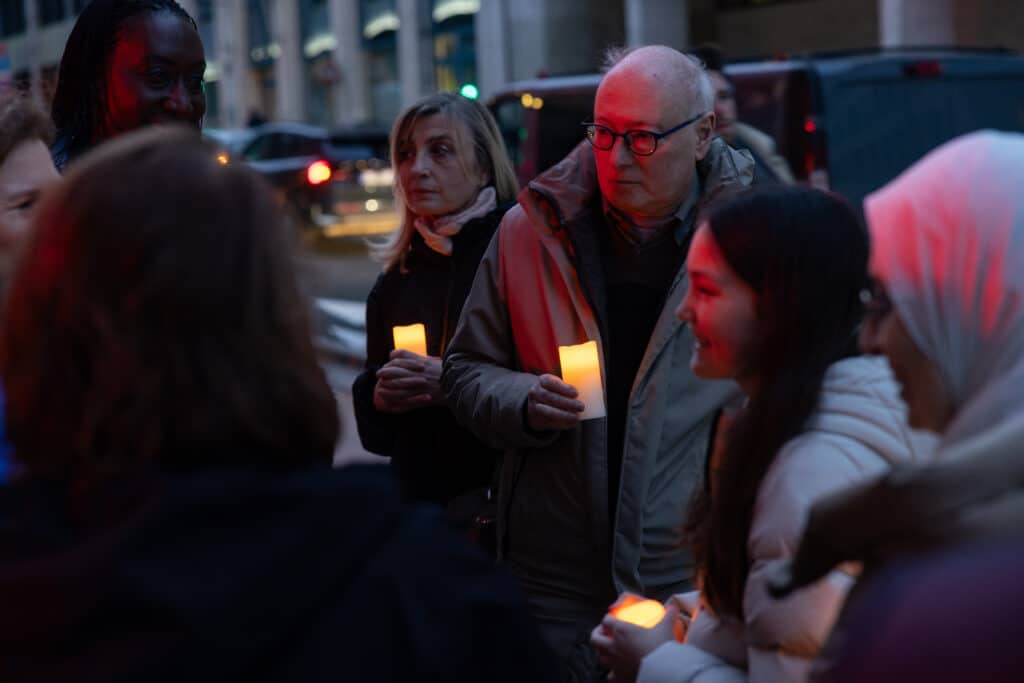
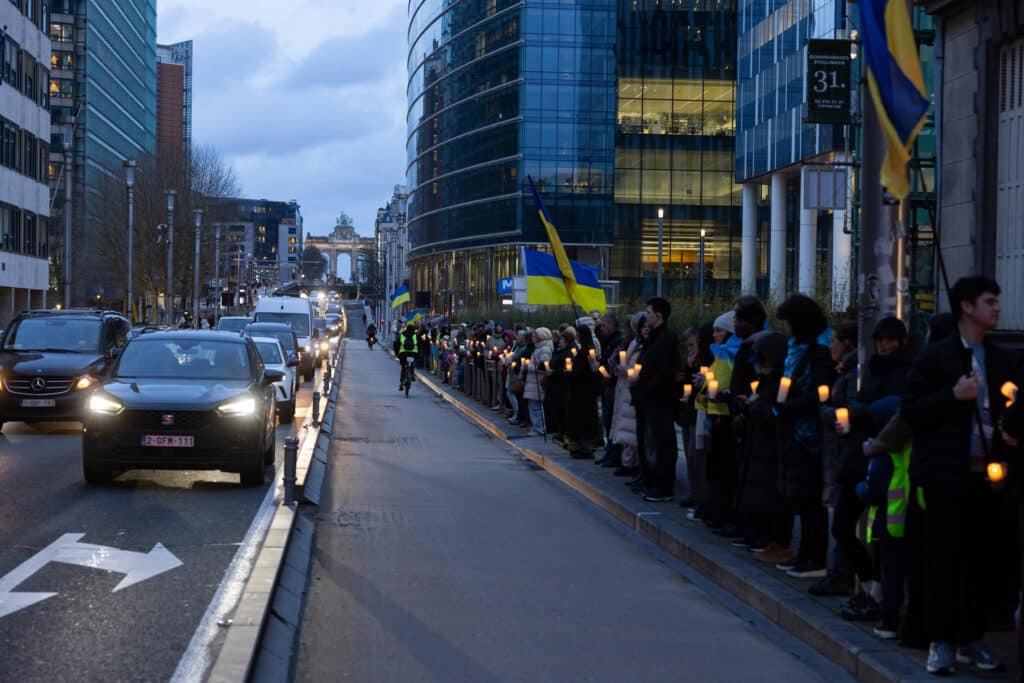
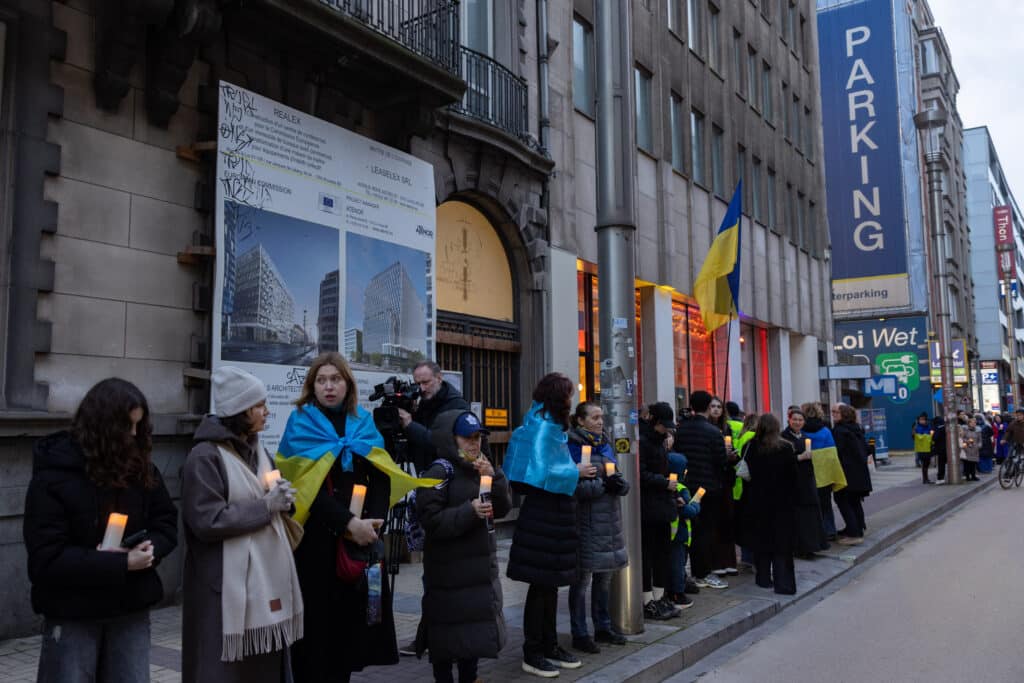
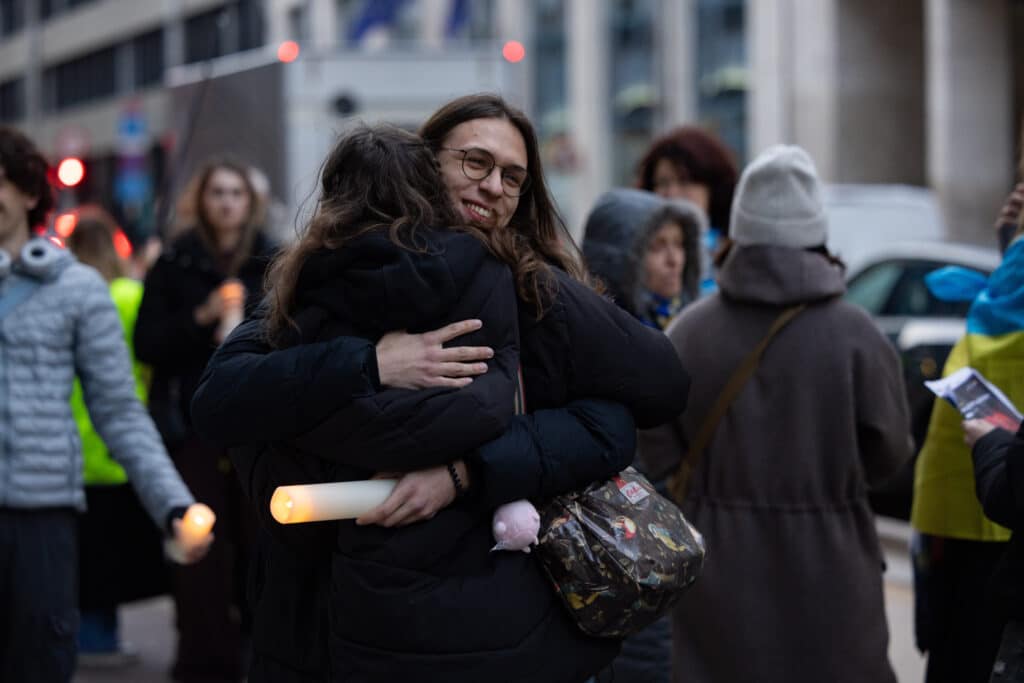
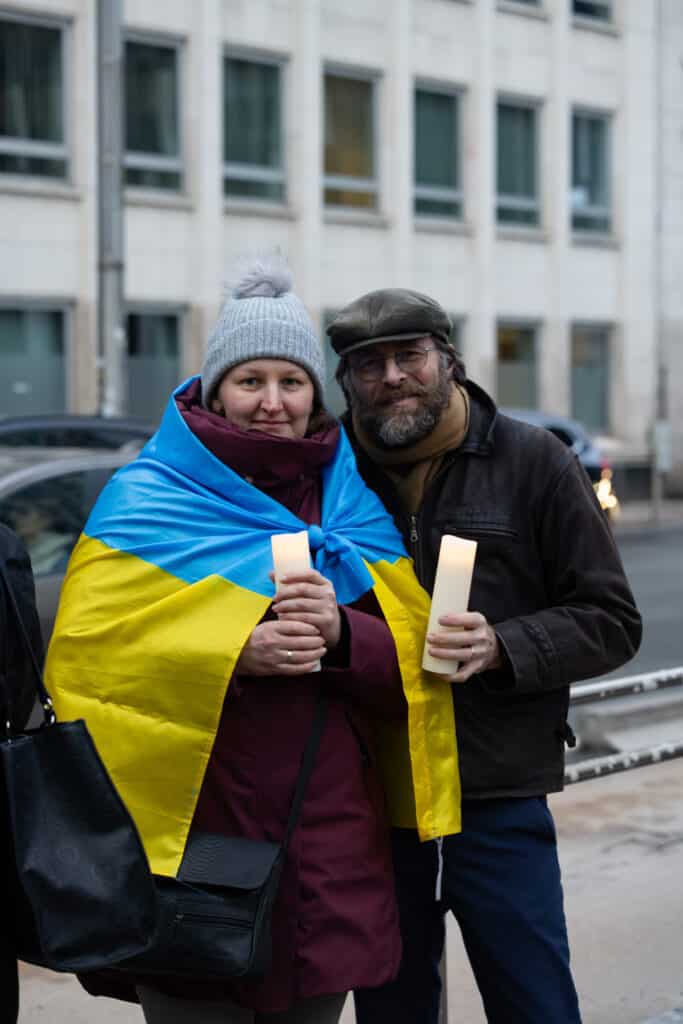
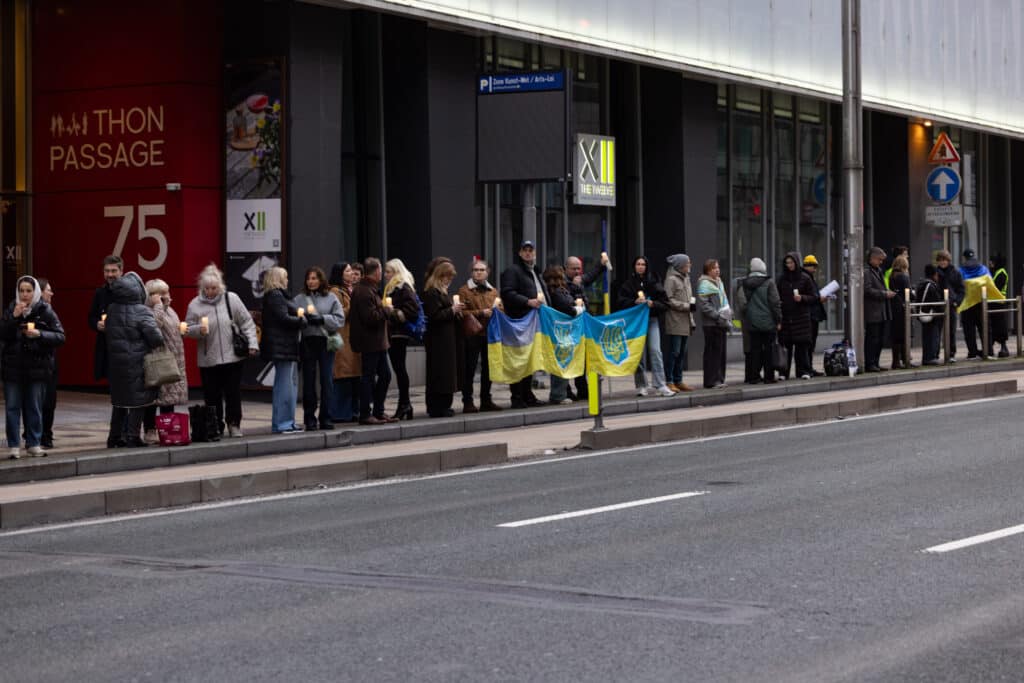
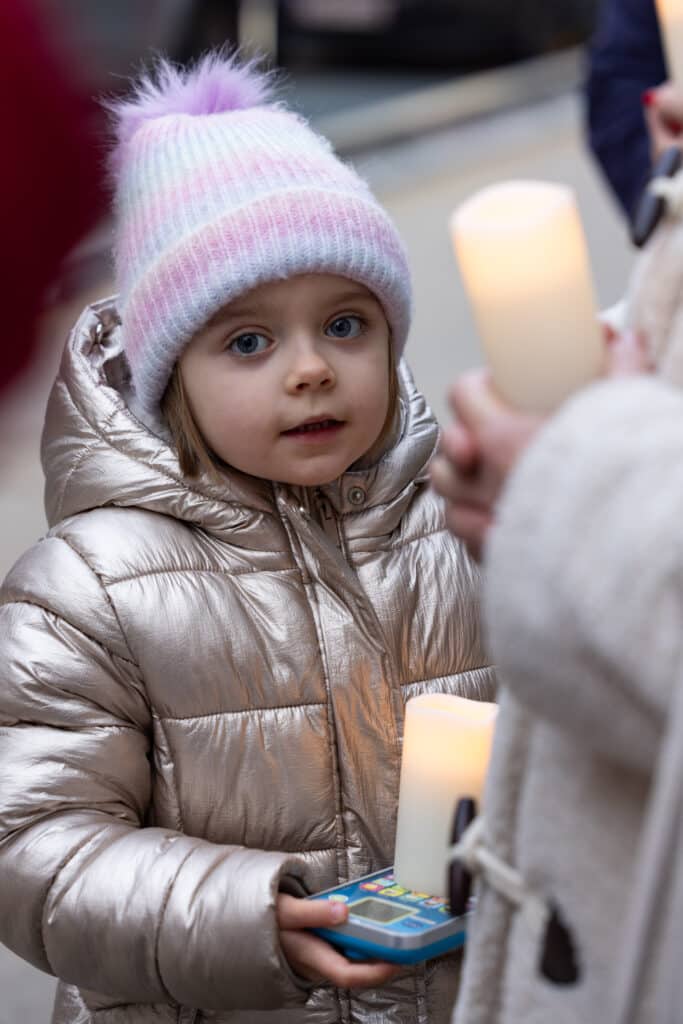
Outside the Ukrainian Voices RC building in Brussels’ European Quarter, hundreds of people gathered with lit candles. Ukrainians, Belgians, locals, and visitors alike joined in solidarity.
Maria and Denis, two young Ukrainians, participated to remind Europeans of the war in their homeland. “After four years of full-scale war, it seems many have become desensitized. Sometimes foreigners even ask me if there is still a war in Ukraine,” Maria said. Denis added, “In Belgium, people talk a lot about the war in Palestine. I came here to make the war in Ukraine visible.”
Elodie, a Belgian, has many Ukrainian classmates at her school and wanted to show support. Beside her was Hanna, who is writing a dissertation on Ukrainians. “I just feel it’s really important to show up also as non-Ukrainians and kind of show our solidarity and that we will not forget that this is still going on after four years. I feel like that’s a really big issue, just to keep it alive outside of the Ukrainian community.”
Among the participants was American war correspondent and filmmaker Zarina Zabrisky, who has Ukrainian roots and recently lived in Kherson. She directed the film Kherson: Safari on People. According to Zarina, the war has entered a new phase – one dominated by drones, where the front line is blurred and danger is felt everywhere. “I see it with my own eyes because I live there. I see these drones flying overhead. Many of my friends have died. Ukraine has been in my heart for four years, and I, like Ukrainians, am waiting for victory – and I will do everything I can to achieve it.”
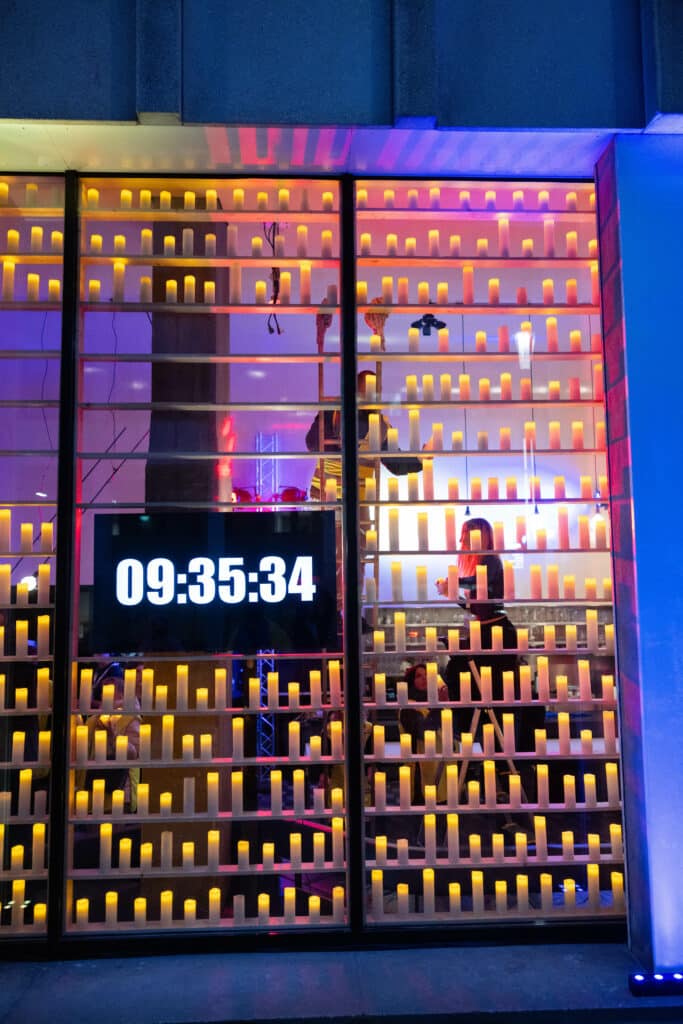
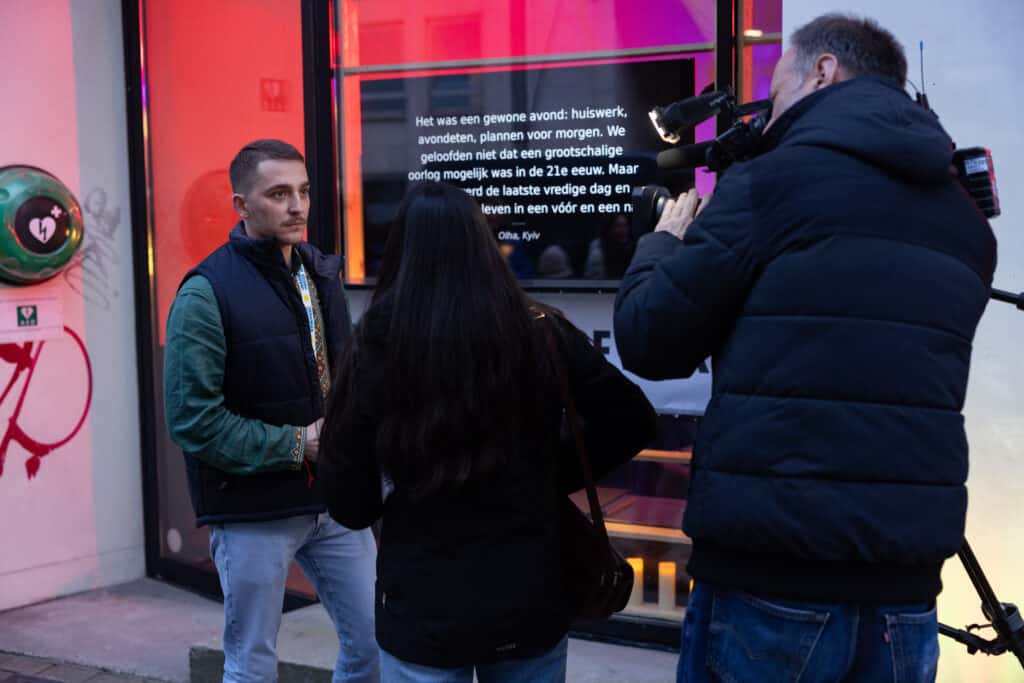
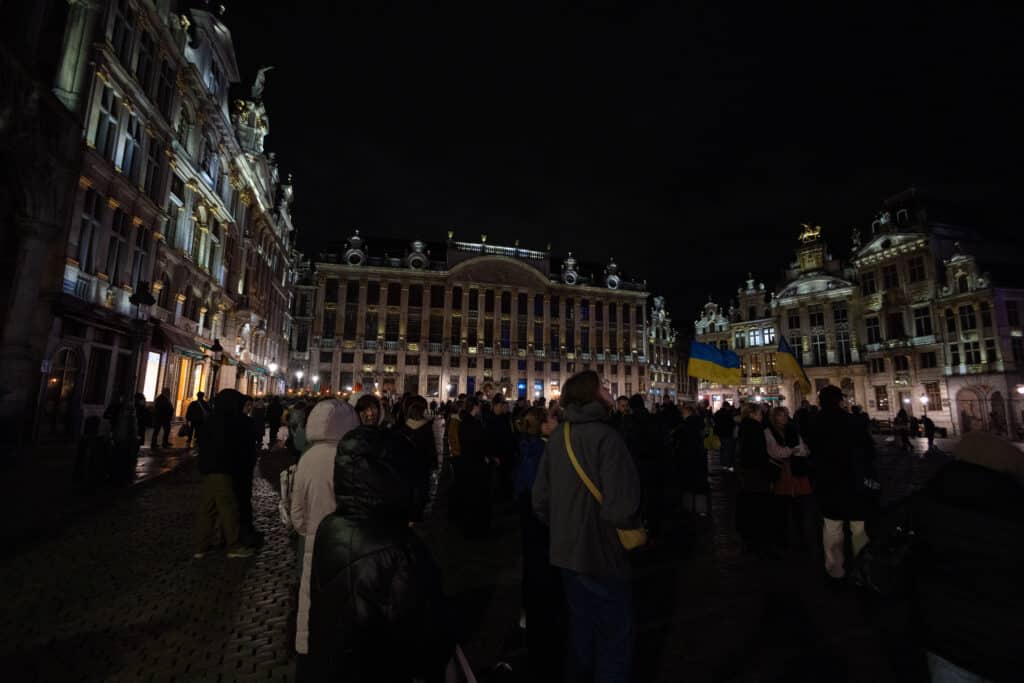
The participants then moved toward the Grand Place, while the candles left in the windows of the Ukrainian Voices RC building burned through the night, a reminder of the ongoing war in Ukraine.
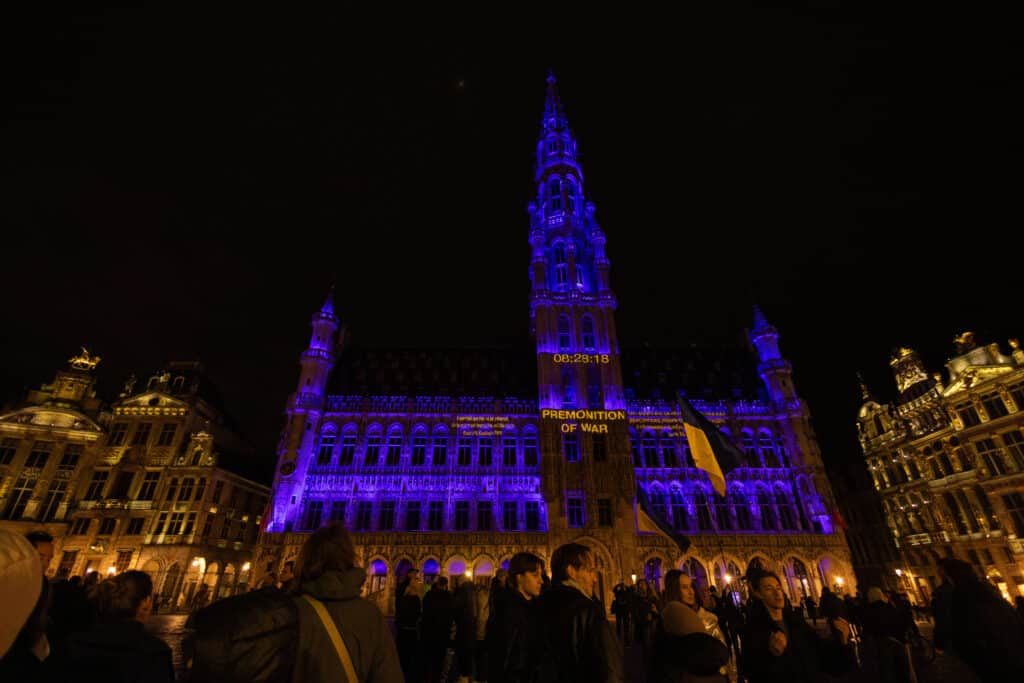
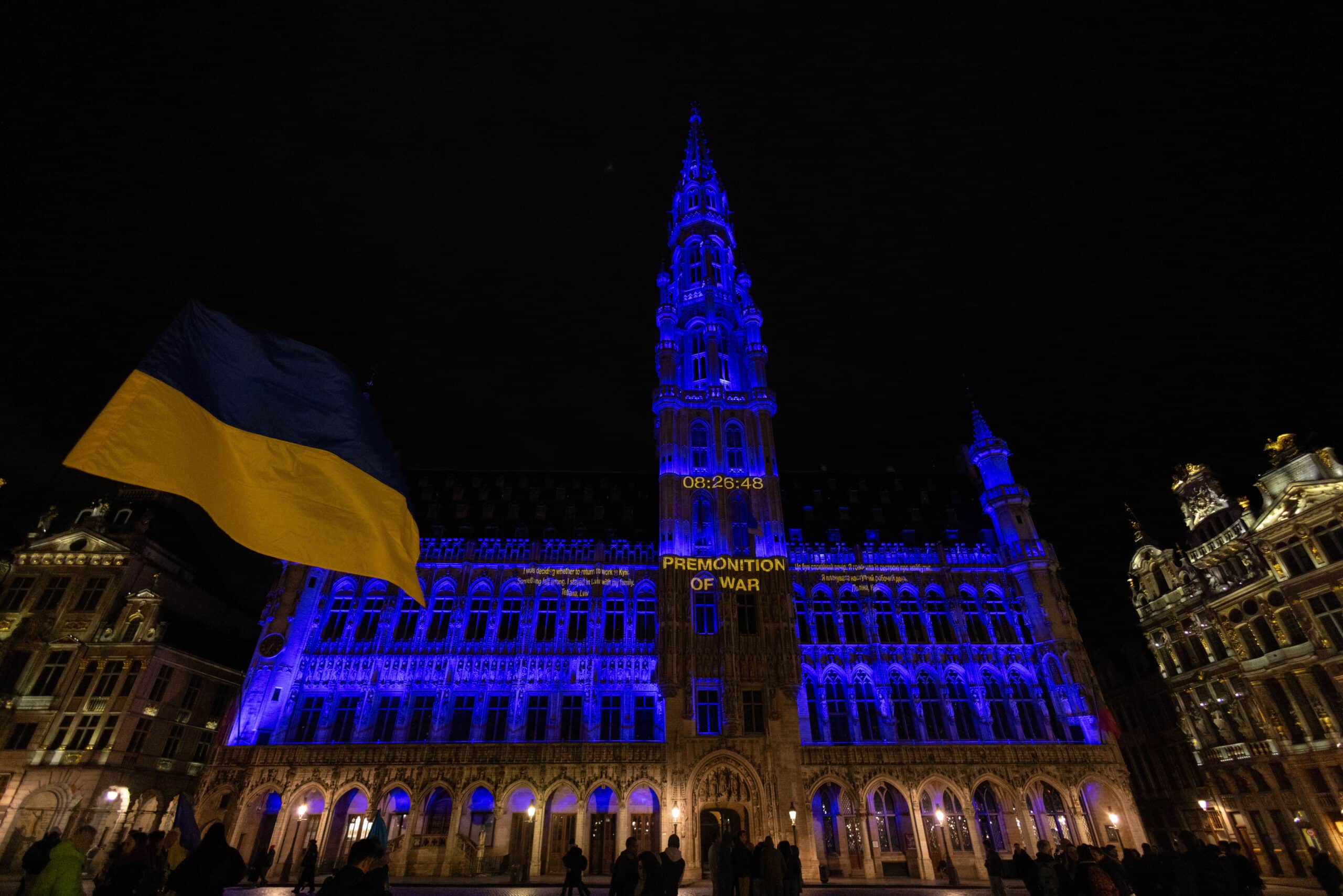
With support from the City of Brussels, a timer was projected on the façade of the town hall at 7:00 PM. It counted down the hours to 4:00 AM – the exact time the first Russian bombs fell on Ukrainian cities – and displayed real testimonies: memories of anxiety, sleepless nights before the war, calls to loved ones, and news nobody wanted to hear. It conveyed that sense of foreboding that many remember in precise detail.
“We’re from Luhansk, and for us, the full-scale invasion felt like déjà vu [Russia occupied Luhansk in 2014]. There were moments when I didn’t know whether we should flee or stay. It was a very intense emotional moment,” said Valeria, an art historian and curator, observing the countdown.
“This timer means that something will happen in eight hours. Early in the morning, something will occur. A countdown always carries pressure – in films, in literature – and it mirrors the tension we felt in those days and weeks as enemy forces gathered near the border. Even people who don’t know what it refers to will approach and ask, ‘What is this countdown?’”
Indeed, people soon asked, “What is this countdown?” On Brussels’ main square, tourists could not take their eyes off the clock.
These were the last anxious hours in a peaceful Ukraine – the moments just before the full-scale war began.